


 中文简体
中文简体 Español
 Français
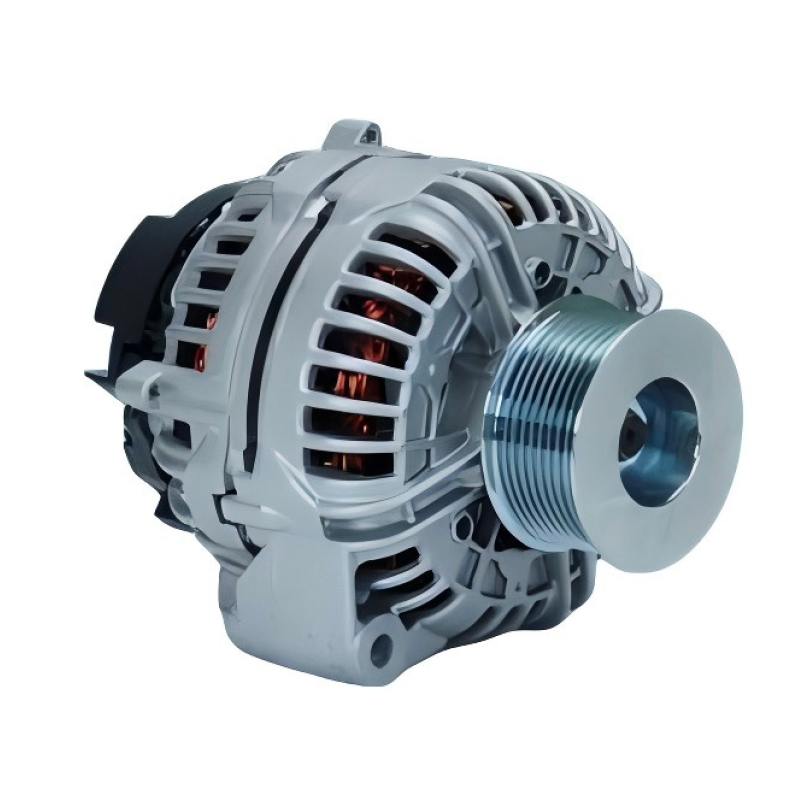
A reliable power solution for commercial and passenger vehicles, the 24V 90A 20289N/0123520500 Bosch car alternator for Hongyan,Genlyon,Saic,lveco,Howo,Weicha is engineered to deliver consistent perfo...
See Details

Get A Quote
How Does an Alternator Work on a Car? A Simple Guide to the Charging System
Oct 14, 2026
Your battery starts the engine, but it cannot keep a modern car running on its own. That job belongs to the alternator: a belt-driven generator that turns the engine's rotation into the electricity that every light, sensor and control module depends on. Most drivers only think about it when the battery warning light appears, and by then the question becomes urgent - how does an alternator work on a car, and why does such a small spinning part matter so much?
We build new alternators for cars, trucks, buses and machines, so we have answered that question many times. Here is the plain-language version.
Content
- 1 What an Alternator Actually Does
- 2 The Main Parts Inside an Alternator
- 3 How an Alternator Works, Step by Step
- 4 From AC to DC: The Rectifier and the Regulator
- 5 How Much Power Does an Alternator Make?
- 6 The Battery and the Alternator: Two Different Jobs
- 7 Warning Signs That the Charging System Is Struggling
- 8 Choosing the Right Replacement Alternator
What an Alternator Actually Does
Once the engine is running, the alternator becomes the vehicle's main source of electrical power. The battery's big moment is cranking the engine; after that it acts as a reservoir, smoothing voltage and covering short bursts of demand. Everything else - ignition, fuel injection, the engine control unit, headlights, wipers, the blower motor, the sound system and phone chargers - is fed by the alternator while you drive.
Its three main duties are straightforward:
- Generate electricity continuously while the engine turns.
- Recharge the battery after starting and keep it topped up.
- Hold voltage steady so electronic systems work reliably.
In a passenger car that steady voltage sits around 13.5 to 14.5 volts. Trucks, buses and many machines use 24-volt systems, which is why the same alternator family is offered in both ratings.
The Main Parts Inside an Alternator
An alternator is a compact assembly, but only a handful of components do the real work.
| Part | What it is | What it does |
|---|---|---|
| Rotor | An iron core wound with copper wire on a shaft | Creates the rotating magnetic field |
| Stator | A stationary ring of copper windings in the housing | Has alternating current induced in its coils |
| Rectifier | Six or more diodes mounted on a heat sink | Converts three-phase AC into usable DC |
| Voltage regulator | A small electronic module | Adjusts rotor current to hold output steady |
| Slip rings and brushes | Two rings on the shaft with carbon brushes | Feed a small current into the spinning rotor |
| Pulley and belt | A grooved pulley driven by the crankshaft | Spins the rotor faster than engine speed |
| Housing and bearings | An aluminium case with sealed bearings | Keeps the rotor and stator aligned at high rpm |
How an Alternator Works, Step by Step
- The engine starts and the drive belt spins the alternator pulley.
- The regulator sends a small current through the brushes and slip rings into the rotor winding.
- That current turns the rotor into an electromagnet, so a magnetic field rotates with it.
- The rotating field sweeps past the stationary stator windings and induces an alternating current in them.
- The rectifier converts that three-phase AC into direct current, which leaves through the main output terminal.
- The regulator samples system voltage and trims the rotor current up or down, whether you are idling in traffic or cruising on the highway.
- The DC output runs the electrical systems and charges the battery at the same time.
If you would like the same sequence explained from a maintenance angle, our article on how a car alternator works and why it matters walks through it again with service tips.
From AC to DC: The Rectifier and the Regulator
Alternating current is fine for generating, but a vehicle needs steady direct current, and that is the rectifier's job. Diodes behave like one-way valves, arranged so that the negative half of each wave is flipped rather than wasted. The result is DC with a small ripple that the battery absorbs easily.
The regulator handles the other half of the task by keeping voltage inside a narrow band instead of letting it climb with engine speed. Most modern alternators are controlled by the engine computer, so output can be adjusted to suit the load. That is why a charging fault can come from wiring, a sensor or software as well as from the alternator itself.
How Much Power Does an Alternator Make?
Output is rated in amps at a set shaft speed. Small cars often use 70 to 90 amp units, family sedans and SUVs usually sit between 120 and 150 amps, and vehicles with heavy electrical demand go much higher. Ambulances, buses, tow trucks and machines with work lights or refrigeration frequently need 200 amps or more.
High output is not just a bigger number on the label. It takes more copper in the stator, heavier diodes and better cooling - the part of the market we work in every day.
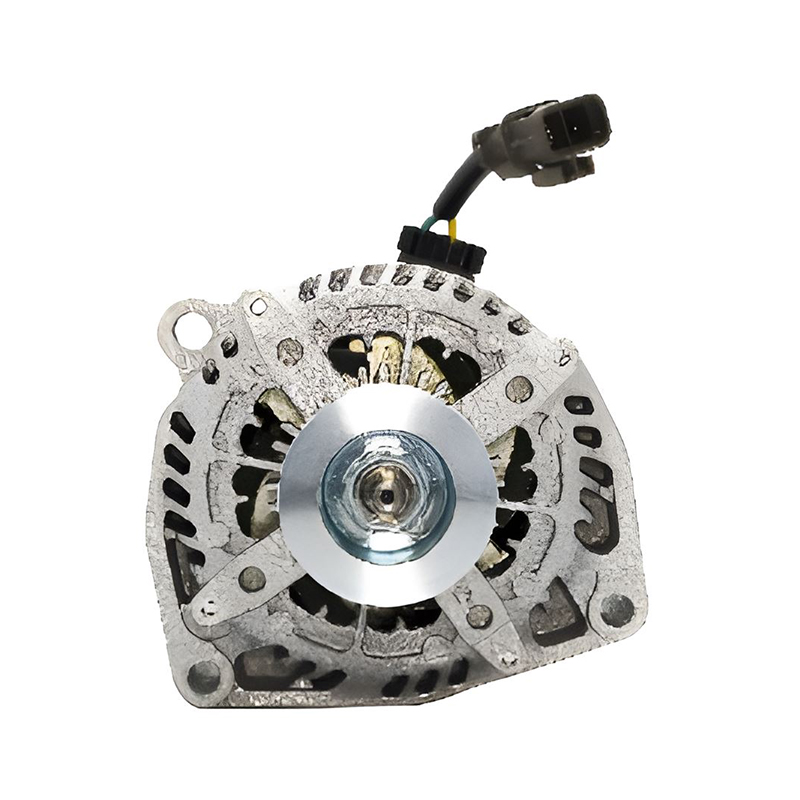 12V 250A Denso Alternator for Chevrolet Silverado 1500 V6High-output replacement for Chevrolet Silverado 1500 V6 4.3L, featuring internal regulation and OEM-style fit for demanding electrical systems.View Product →
One practical point worth remembering: rated output is measured at a specific speed, often around 6,000 rotor rpm. At idle, a standard alternator may deliver only a third of its rating, which is why accessories can dim the lights at a stop and stop dimming once you pull away.
The Battery and the Alternator: Two Different Jobs
Because the two parts work together, a flat battery is often blamed on the alternator, and vice versa.
| Job | Battery | Alternator |
|---|---|---|
| Main role | Stores energy and cranks the engine | Generates power while the engine runs |
| Works hardest | At start-up and during peak demand | Whenever the engine is turning |
| Typical service life | Three to five years | Often well past 150,000 kilometres |
| Failure clue | Slow cranking, corroded terminals | Warning light, dim lights, whining noise |
Warning Signs That the Charging System Is Struggling
An alternator rarely fails without warning. Watch for:
- The battery warning light staying on after the engine starts.
- Headlights that dim at idle and brighten when you rev the engine.
- A battery that goes flat overnight even after a long drive.
- Whining, growling or grinding from the belt area.
- A burning rubber or hot electrical smell.
- Electrical oddities such as flickering dash lights or a radio that cuts out.
A multimeter gives a quick answer: roughly 12.4 to 12.7 volts with the engine off, and 13.5 to 14.5 volts at idle. If running voltage stays low while the belt turns properly, the alternator, its wiring or the regulator is the likely cause. Our workshop notes on common alternator problems cover the same symptoms in more detail.
Choosing the Right Replacement Alternator
If the diagnosis points to the alternator, the correct unit comes down to three things: fitment, amperage and build quality.
Matching fitment and amperage
Mounting points, pulley type, plug shape and output rating all have to match the vehicle, or a unit that looks identical may not charge correctly. A 120 amp alternator for a BMW 3 Series is not the same as a 120 amp unit for an unrelated model, even though the rating matches.
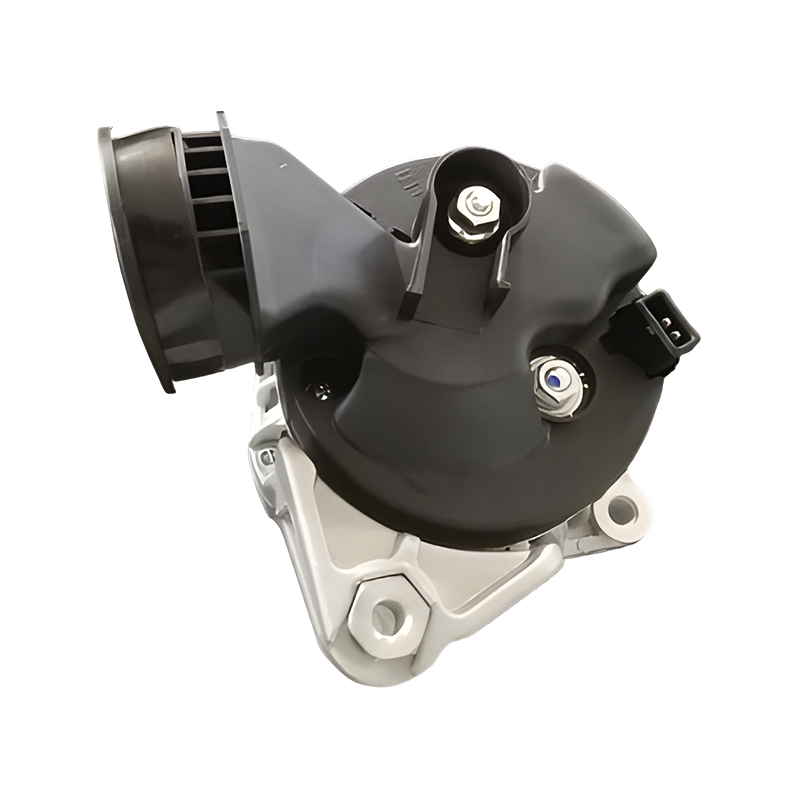 12V 120A Bosch Alternator for BMW 320/2.0i E46 M52B20OE-style 120A Bosch replacement for BMW 320/2.0i E46 M52B20, with internal regulator; check listed OEM numbers and pulley/mount dimensions before ordering.View Product →
Deciding whether to upgrade output
Drivers who add winches, light bars, extra batteries or refrigeration sometimes choose a higher rated alternator than the original. That can work well, provided the belt, wiring and battery can cope with the extra current. For a van with a heavy electrical load, a 200 amp unit is a sensible step up from the factory standard.
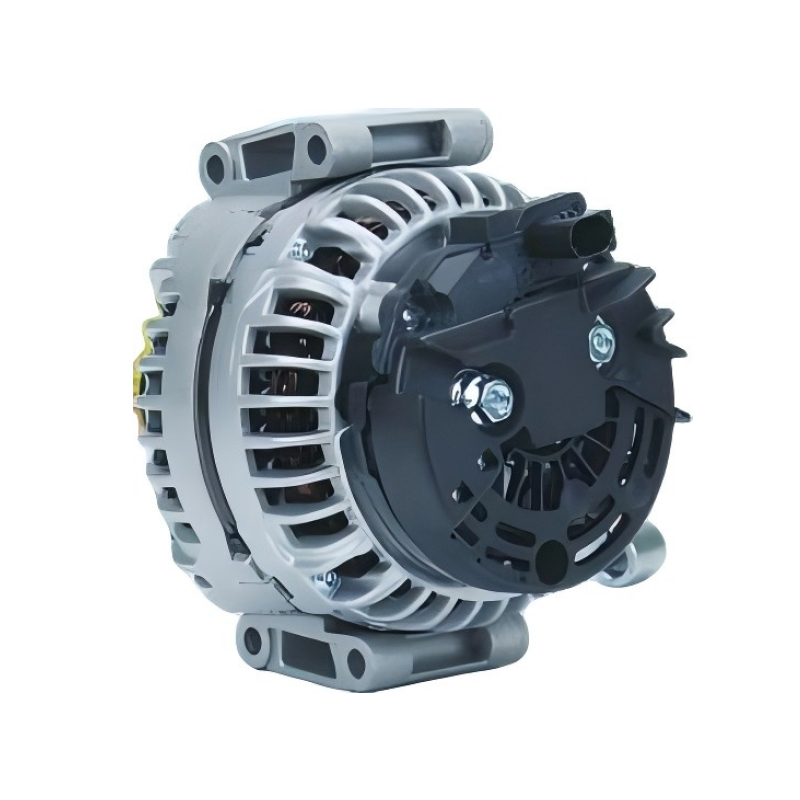 200A Bosch Alternator for Mercedes-Benz Sprinter Vito Viano CDi200A Bosch replacement listed for Mercedes-Benz Sprinter, Vito and Viano CDi 2.1L; verify voltage and OEM references before ordering.View Product →
Finally, ask whether an alternator is genuinely new or rebuilt. Rebuilt units can perform well, but the result depends entirely on the rebuilder. With thousands of part numbers in our alternator range, matching by OEM number is usually the fastest route, and we manufacture 100 percent new units and test each one on the bench before packing, because that is the only way to know exactly what sits inside the housing.
An alternator is a simple idea executed precisely: spin a magnetic field, capture the current it induces, convert it to DC and control it. Once that sequence makes sense, the symptoms of a failing unit do too, along with the reason a healthy charging system keeps everything from the headlights to the engine computer working. If your battery light comes on, do not ignore it.
Related products
-
-
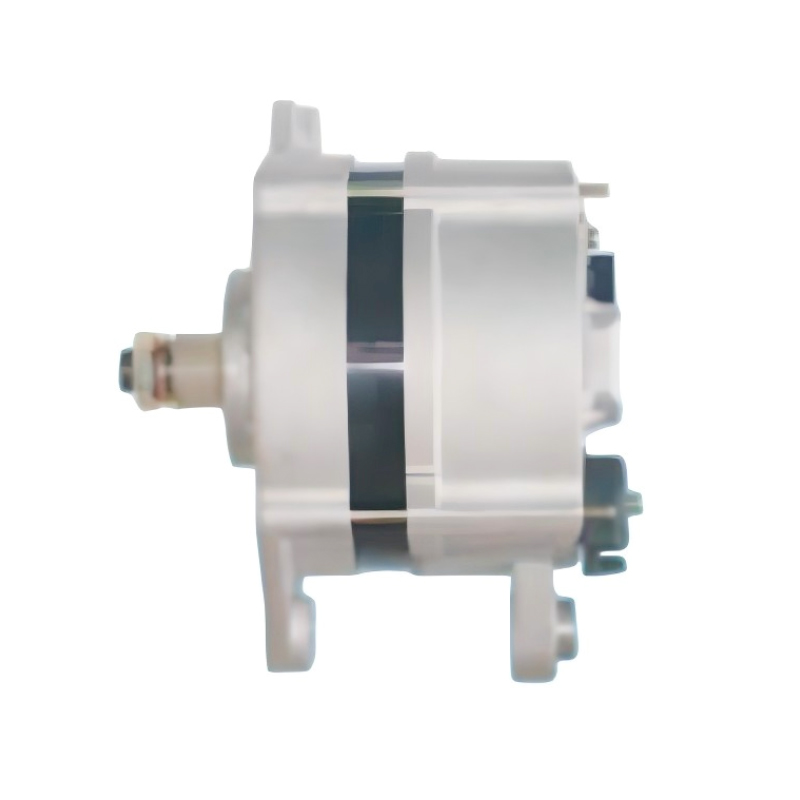
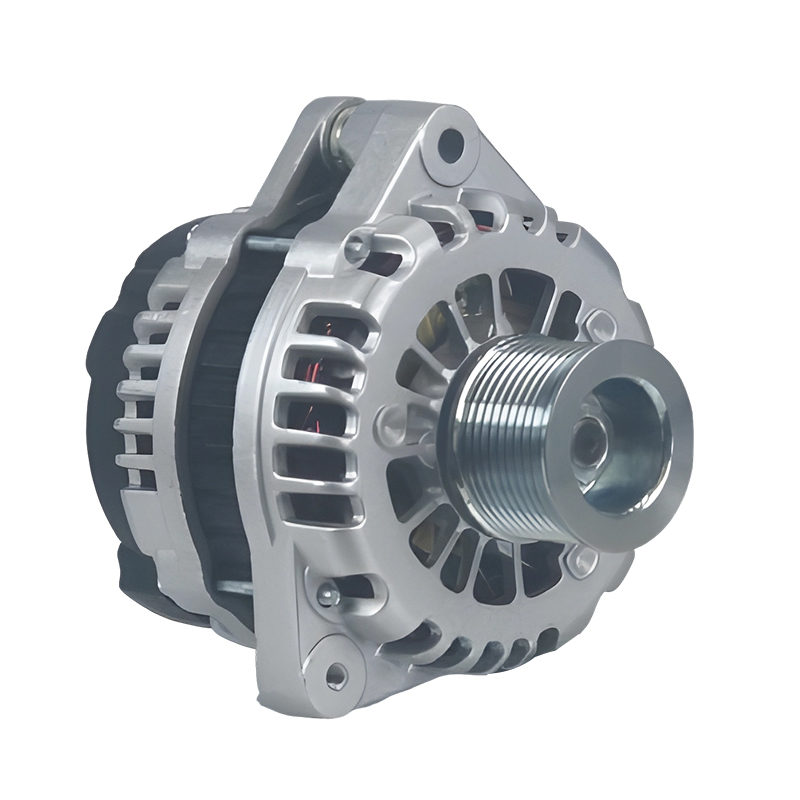
The 24V 55A 12135/0120469978 Bosch car alternator for IVECO EuroCargo EuroTrakker 100E15 90E37 is a reliable power solution specifically engineered for the IVECO EuroCargo EuroTrakker 100E15 90E37 eng...
See Details -
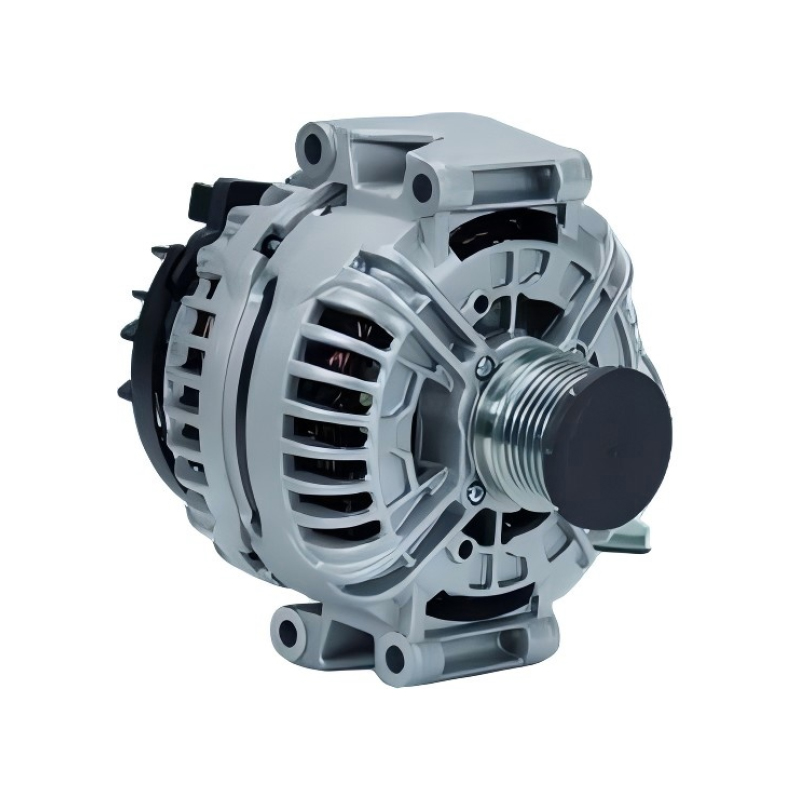
Designed as a reliable replacement for MERCEDES BENZ Sprinter, Vito, and Viano models equipped with the CDi2.1L engine, the 12V 200A 0124625006 Bosch car alternator for MERCEDES BENZ Sprinter/vito/via...
See Details -
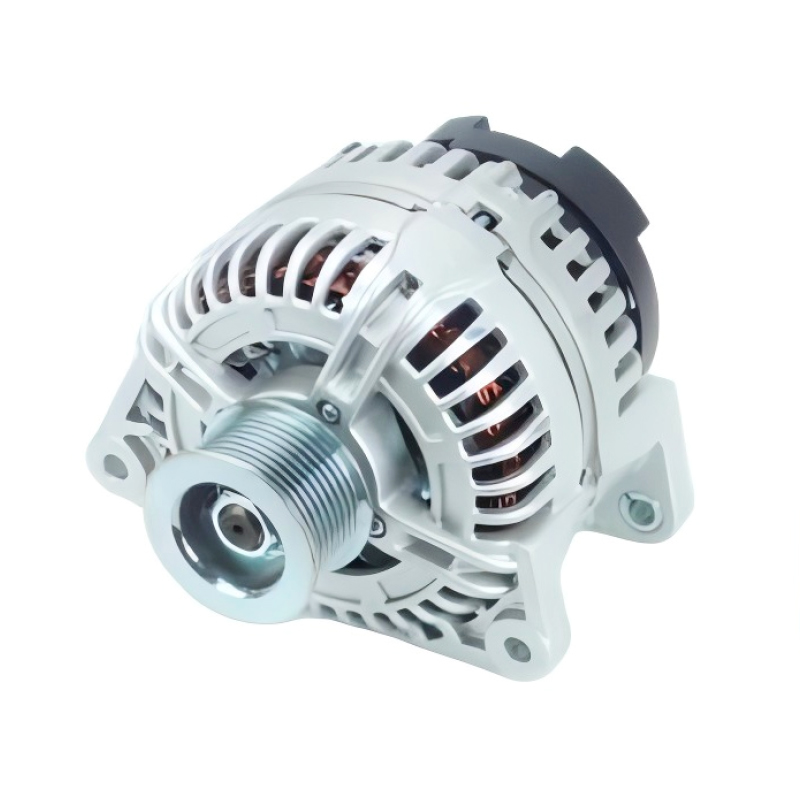
The 24V 100A 370100386 Bosch car alternator for Jinlong CMB YUCHAI YC4D140-20 is a high-quality power supply component meticulously designed for the Jinlong CMB YUCHAI YC4D140-20 engine series. As a t...
See Details -
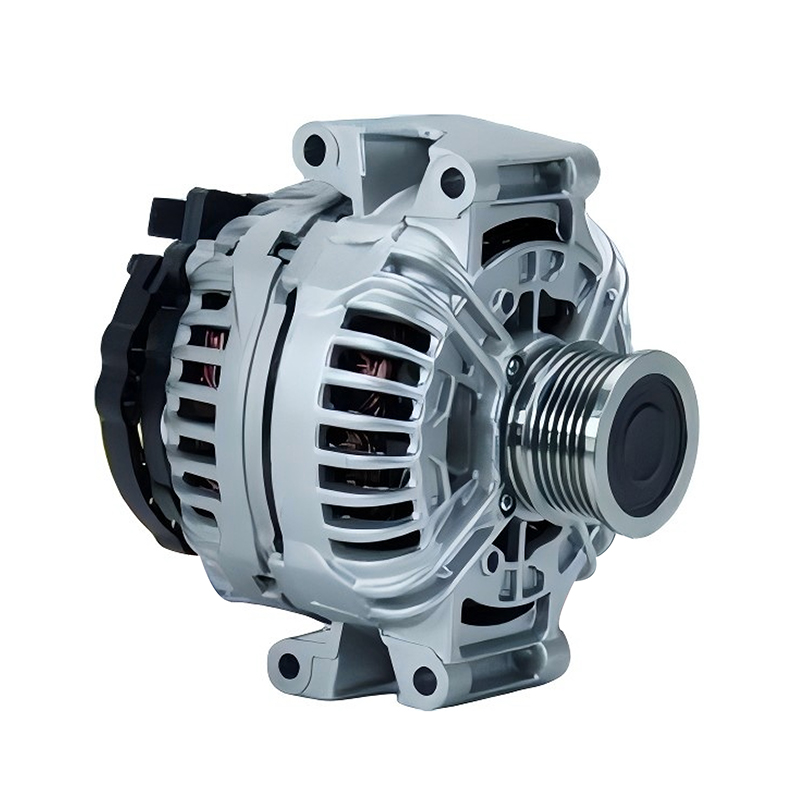
Designed to meet the demanding electrical needs of modern vehicles, the 12V 150A 11064/0124615009 Bosch car alternator for AUDI A4 1.6L, 1.8L, 2.0L is a trusted solution for AUDI A4 owners. Boasting a...
See Details -
When it comes to keeping your JOHN DEERE 2007-2009 model running smoothly, a reliable alternator is non-negotiable—and the 12V 200A 12796/0124625030 Bosch car alternator for JOHN DEERE 2007-2009 is en...
See Details

Contact Information
-
Production Plant:No.19, West Taihu Avenue, Wujin District, Changzhou City, Jiangsu Province, China
-
Email:
-
Phone:+86 157 2060 1523
-
TEL:+86-519 8639 0626
Copyright © 2025 Changzhou Hancheng Auto Parts Co., Ltd. All Rights Reserved.
PrivacyAutomotive Alternators Manufacturers High Output Car Alternator Factory
