


 中文简体
中文简体 Español
 Français
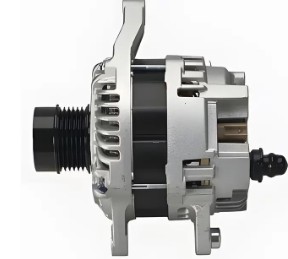
A reliable power solution for commercial and passenger vehicles, the 24V 90A 20289N/0123520500 Bosch car alternator for Hongyan,Genlyon,Saic,lveco,Howo,Weicha is engineered to deliver consistent perfo...
See Details

Get A Quote
How Do You Know If Your Mitsubishi's Alternator Needs Replacing?
Apr 20, 2026
The alternator is one of the hardest-working components on any Mitsubishi vehicle. While the battery provides the initial burst of power to start the engine, the alternator takes over immediately after, generating electricity to run every system in the car — from the headlights and climate control to the engine management computer and infotainment screen. When the alternator begins to fail, it rarely happens without warning. Recognising the early signs gives you time to act before a partial failure becomes a complete breakdown, an unexpectedly flat battery, or damage to other electrical components. Below are the five most reliable indicators that your Mitsubishi is telling you its alternator needs attention.
Content
- 1 The Battery Warning Light Comes On — And Stays On
- 2 Headlights and Interior Lights That Dim or Fluctuate
- 3 A Growling, Whining, or Grinding Noise from the Engine Bay
- 4 Repeated Battery Failures or a Battery That Won't Hold Charge
- 5 Electrical Accessories Behaving Erratically or Failing Intermittently
- 6 Mitsubishi Models and Their Alternator Service Intervals
- 7 What to Do When You Suspect an Alternator Problem
The Battery Warning Light Comes On — And Stays On
The battery-shaped warning light on your Mitsubishi's instrument cluster is widely misunderstood. Most drivers assume it signals a failing battery — and sometimes it does — but in the majority of cases it is the alternator that has triggered it. Modern Mitsubishi vehicles, from the Outlander to the Eclipse Cross and ASX, monitor the charging system voltage continuously. When that voltage drops below approximately 13.5 volts or climbs above 14.8 volts, the ECU illuminates the warning light to alert you that the charging system is outside its normal operating range.
A failing alternator most commonly causes under-voltage. As the internal windings, voltage regulator, or rectifier diodes wear out, the unit generates less current than the vehicle's electrical load demands. The battery begins to compensate, discharging gradually while you drive. If you notice the warning light flickering when you switch on the heated seats, rear demister, or air conditioning — all high-draw accessories — that fluctuation is a strong sign that the alternator is struggling under load rather than the battery reaching end of life.
Do not dismiss an intermittent warning light as a sensor glitch. Have the charging system tested with a dedicated alternator load tester, not just a basic battery voltage check. A battery that reads 12.4 volts with the engine off may read 11.9 volts after 20 minutes of night driving if the alternator is not replenishing it — a distinction a proper load test will immediately reveal.
Headlights and Interior Lights That Dim or Fluctuate
Electrical lighting is among the first systems to reflect alternator output instability, because lighting voltage is directly visible to the driver in a way that, say, fuel injector voltage is not. On a healthy Mitsubishi, headlight brightness should remain perfectly constant at any engine speed. When the alternator is failing, you may notice headlights that dim noticeably at idle and brighten when you rev the engine — a classic symptom of output that tracks engine RPM rather than maintaining the regulated 14.0–14.4 volts a functional unit delivers regardless of speed.
Interior lighting symptoms are subtler but equally telling. Dashboard backlighting that dims when the blower motor runs at full speed, or a navigation screen that briefly blacks out when multiple accessories engage simultaneously, both point to voltage sag caused by an alternator that cannot supply sufficient current under combined load. On Mitsubishi PHEV models such as the Outlander PHEV, the 12V auxiliary system is charged by a DC-DC converter rather than a traditional belt-driven alternator, so the diagnosis pathway differs — but the symptom of voltage-dependent lighting behaviour remains equally significant.
If you drive primarily in urban conditions with frequent stop-start cycles, the problem will be more pronounced because the alternator spends more time at low RPM where its output is naturally reduced. Pay particular attention during evening commutes when the full suite of lights, heating, and audio systems are running simultaneously — this is when a marginal alternator will show its limitations most clearly.
A Growling, Whining, or Grinding Noise from the Engine Bay
Not all alternator failure is electrical in origin. The unit contains mechanical components — most critically a rotor shaft supported by two or more sealed bearings — that wear over time and produce characteristic sounds when they begin to degrade. Identifying these sounds early can prevent a complete mechanical seizure that, in some cases, snaps the drive belt and disables engine cooling or power steering simultaneously.
Growling or Rumbling at Idle
A low-frequency growl that changes pitch with engine speed, particularly noticeable at idle with the bonnet open, is characteristic of worn rotor bearings. The sound is produced by metal-on-metal contact as the bearing races develop pitting or lose lubrication. On Mitsubishi four-cylinder engines — the 2.0-litre MIVEC unit in the Lancer and the 2.4-litre found in older Outlanders — the alternator is positioned accessibly at the front of the engine block, making it relatively easy to isolate the noise source by temporarily removing and re-routing the serpentine belt to check whether the noise disappears.
High-Pitched Whine or Squeal
A high-pitched whine that increases with electrical load — louder when you switch on the rear demister or headlights — is typically caused by a failing voltage regulator or diode pack rather than a mechanical bearing issue. The sound originates from the electromagnetic components inside the alternator being driven beyond their capacity. Separately, a sharp squeal that is loudest on cold starts and fades as the engine warms is more likely attributable to belt slippage on the alternator pulley, which can cause both noise and reduced charging output even if the alternator itself is mechanically sound.
Repeated Battery Failures or a Battery That Won't Hold Charge
If you have replaced your Mitsubishi's battery once in the past 12 months and find yourself facing another flat battery, the alternator is almost certainly the root cause rather than bad luck with battery quality. A correctly functioning alternator maintains battery state of charge at 95–100% during normal driving. A failing unit that delivers only 12.8 volts instead of the required 14.2 volts will slowly drain the battery over days or weeks, presenting as repeated unexpected flat batteries that a jump-start temporarily resolves.
This pattern is one of the most frequently misdiagnosed faults in independent workshops. A battery test performed in isolation will show a battery that has been depleted by undercharging — it reads low capacity not because the battery has failed but because it has never been properly recharged. Without testing the alternator output under load, a replacement battery is installed, the problem recurs within months, and the owner concludes the replacement battery was defective. The correct diagnostic sequence is always:
- Fully charge the battery on an external charger overnight before any testing.
- Test battery health with a conductance tester to confirm the battery itself is not faulty.
- Test alternator output voltage at idle, at 2,000 RPM, and under full electrical load.
- Check alternator output for AC ripple, which indicates diode pack failure even when DC voltage appears adequate.
- Inspect the alternator drive belt tension and condition before concluding the alternator requires replacement.
Following this sequence ensures the correct component is replaced and avoids the common and costly error of fitting a new battery to a car that will simply flatten it again within weeks.
Electrical Accessories Behaving Erratically or Failing Intermittently
Modern Mitsubishi vehicles are heavily dependent on stable, consistent electrical supply. The engine management system, transmission control unit, ABS module, and safety systems such as Forward Collision Mitigation and Lane Departure Warning all operate within tight voltage tolerances. When alternator output degrades and voltage fluctuates, these modules begin to behave unpredictably — producing symptoms that appear completely unrelated to the charging system.
Common presentations of alternator-induced electrical instability on Mitsubishi models include:
- The infotainment system rebooting spontaneously while driving, particularly after engaging a high-draw accessory.
- Power windows operating more slowly than normal or stalling mid-travel.
- The TPMS, ABS, or stability control warning lights illuminating without a corresponding mechanical fault in those systems.
- Air conditioning compressor cycling on and off at shorter intervals than usual as the ECU attempts to shed electrical load.
- Stored fault codes in multiple unrelated modules that clear temporarily after a battery reconnection but return within a short drive.
This last symptom — multiple fault codes across unrelated systems — is a particularly important diagnostic clue. When a technician retrieves codes from the ABS module, the climate control module, and the body control module simultaneously without a plausible shared mechanical cause, low system voltage should immediately be the first suspect, not a coincidental failure of three separate components.
Mitsubishi Models and Their Alternator Service Intervals
While alternators do not have a fixed replacement interval like spark plugs or brake fluid, their typical service life and common failure modes vary by model and usage pattern. The table below summarises what owners of common Mitsubishi models should be aware of.
| Model | Typical Alternator Life | Most Common Failure Mode | Notes |
|---|---|---|---|
| Outlander (2013–2021) | 130,000–180,000 km | Voltage regulator wear | Check belt tension at 100,000 km service |
| ASX (2010–present) | 120,000–160,000 km | Diode pack failure | AC ripple test recommended at 100,000 km |
| Eclipse Cross (2018–present) | 150,000+ km | Bearing wear in high-mileage use | Newer design; fewer early failures reported |
| Lancer (2007–2017) | 100,000–150,000 km | Brush and slip ring wear | Higher incidence in city-cycle driving |
| Pajero Sport (2015–present) | 140,000–200,000 km | Contamination in off-road use | Inspect for water/mud ingress annually |
What to Do When You Suspect an Alternator Problem
Acting promptly on alternator warning signs protects both your safety and your budget. A failing alternator that is ignored long enough will eventually discharge the battery to the point where the engine cuts out while driving — a dangerous scenario if it occurs on a motorway or in heavy traffic. Once voltage drops below the minimum threshold needed to sustain ignition, the engine will stall without warning, and restarting may not be possible.
If you are currently experiencing any of the five signs described above, the most practical immediate steps are to reduce electrical load — turn off the heated seats, rear demister, and unnecessary accessories — and drive directly to a service centre rather than continuing to use the vehicle normally. Avoid short trips that do not allow the alternator sufficient running time to recharge what the starter motor consumes, and do not leave the vehicle standing for extended periods if the battery is already partially discharged.
At the service centre, insist on a full charging system test that includes output voltage at multiple RPM points, current output under load, and an AC ripple test. A healthy Mitsubishi alternator should produce between 13.8 and 14.4 volts at idle, rising to approximately 14.4 volts at 2,000 RPM, with AC ripple below 50 millivolts. Any readings outside these parameters confirm the alternator requires replacement. Genuine Mitsubishi replacement alternators carry a manufacturer's warranty and are matched precisely to the vehicle's electrical load requirements — an important consideration on modern vehicles where the charging system voltage is managed dynamically by the ECU rather than set at a fixed output.
Related products
-
-
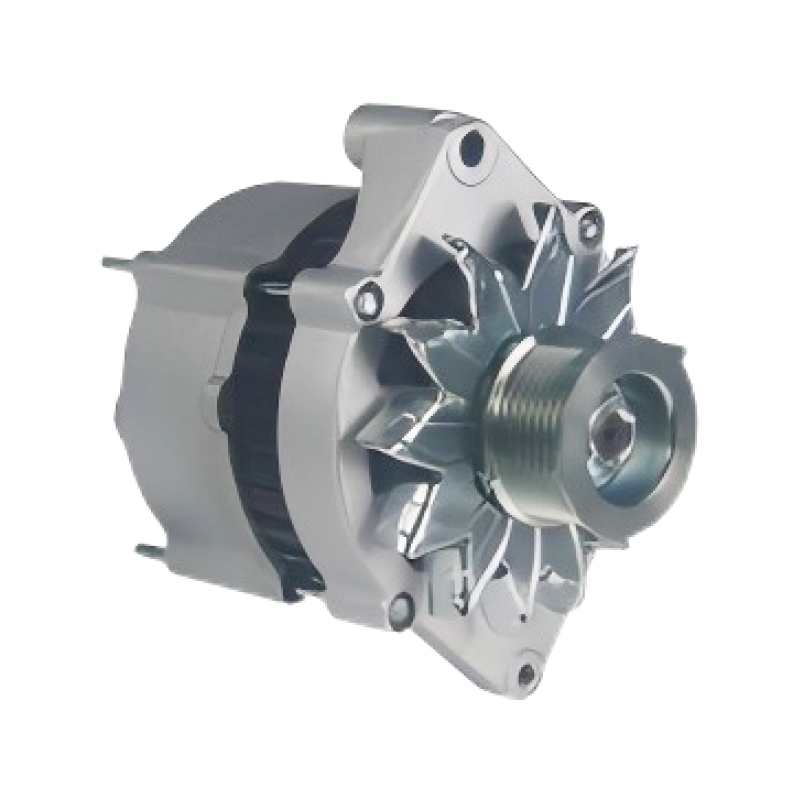
The 12V 95A 12145/0120484011 Bosch car alternator for CASE Crawler Dozer 650K Series 3 Case 4.5L is a high-quality replacement part specifically engineered for the CASE Crawler Dozer 650K Series 3 equ...
See Details -
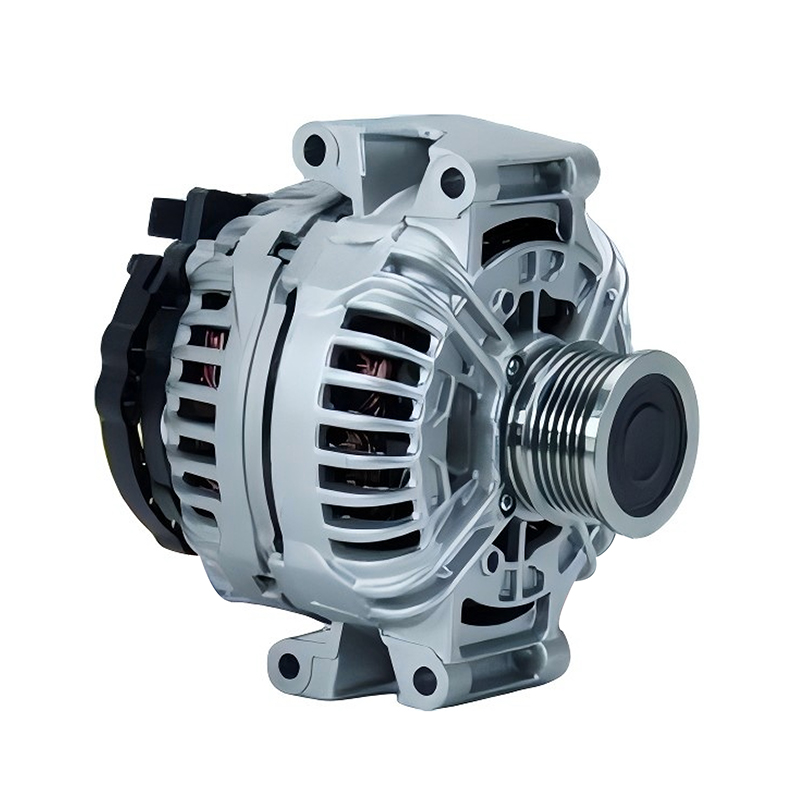
Designed to meet the demanding electrical needs of modern vehicles, the 12V 150A 11064/0124615009 Bosch car alternator for AUDI A4 1.6L, 1.8L, 2.0L is a trusted solution for AUDI A4 owners. Boasting a...
See Details -
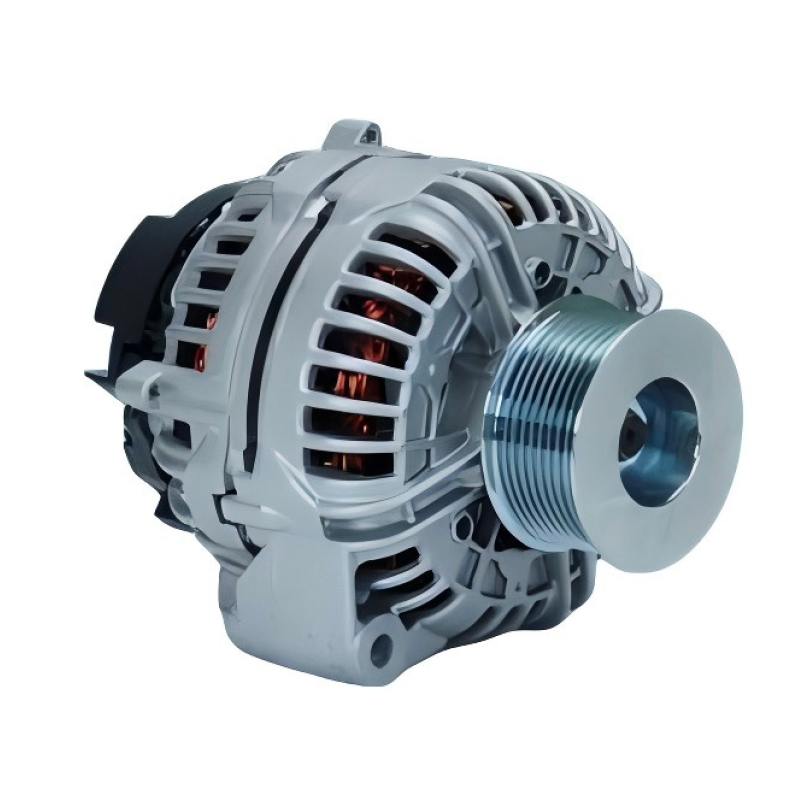
When it comes to keeping your JOHN DEERE 2007-2009 model running smoothly, a reliable alternator is non-negotiable—and the 12V 200A 12796/0124625030 Bosch car alternator for JOHN DEERE 2007-2009 is en...
See Details -
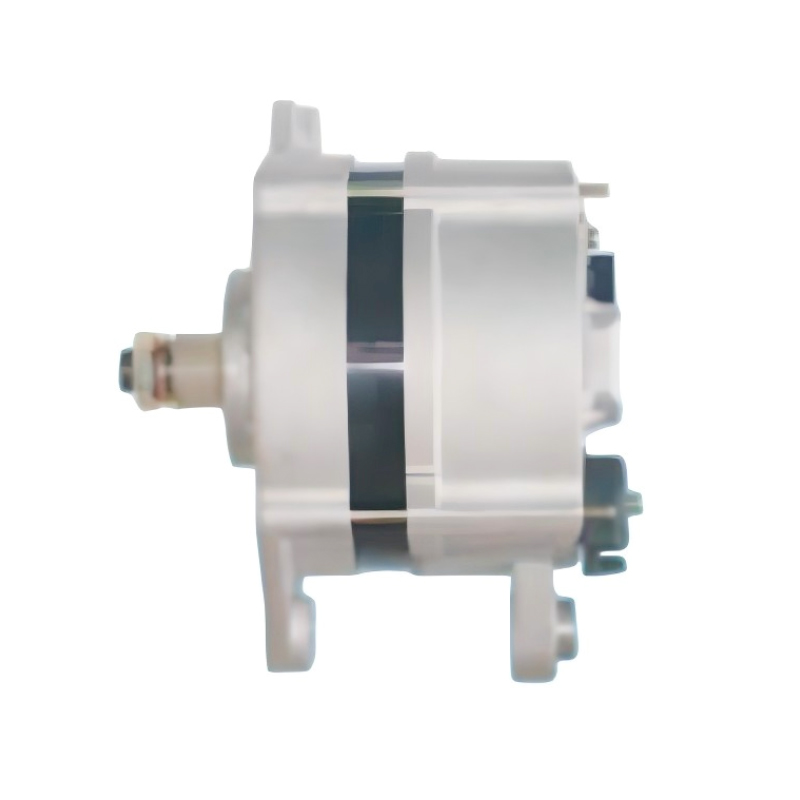
The 24V 55A 12135/0120469978 Bosch car alternator for IVECO EuroCargo EuroTrakker 100E15 90E37 is a reliable power solution specifically engineered for the IVECO EuroCargo EuroTrakker 100E15 90E37 eng...
See Details -
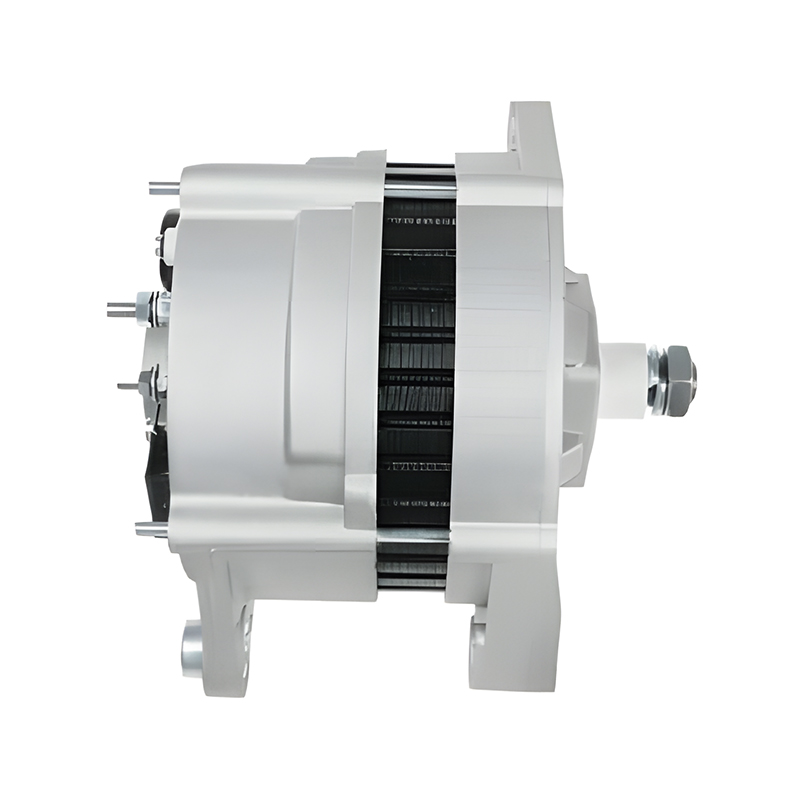
Designed as a reliable power solution for the IVECO 100 E15 engine series, the 24V 80A 12709/0120468116 Bosch car alternator for IVECO 100 E15 combines precision engineering with durable performance t...
See Details

Contact Information
-
Production Plant:No.19, West Taihu Avenue, Wujin District, Changzhou City, Jiangsu Province, China
-
Email:
-
Phone:+86 157 2060 1523
-
TEL:+86-519 8639 0626
Copyright © 2025 Changzhou Hancheng Auto Parts Co., Ltd. All Rights Reserved.
PrivacyAutomotive Alternators Manufacturers High Output Car Alternator Factory
