


 中文简体
中文简体 Español
 Français
The 24V 55A 12135/0120469978 Bosch car alternator for IVECO EuroCargo EuroTrakker 100E15 90E37 is a reliable power solution specifically engineered for the IVECO EuroCargo EuroTrakker 100E15 90E37 eng...
See Details

Get A Quote
Bosch, Delco, and Denso Car Alternator: Brands, Differences, and Guide
Mar 23, 2026
Content
- 1 Car Alternators: The Three Brands That Define the Market
- 2 How a Car Alternator Works: Core Technology Common to All Three Brands
- 3 Bosch Car Alternator
- 4 Delco Car Alternator
- 5 Denso Car Alternator
- 6 Comparing Bosch, Delco, and Denso Alternators
- 7 Diagnosing a Failing Car Alternator
- 8 Replacing a Car Alternator: New, Remanufactured, or Aftermarket
Car Alternators: The Three Brands That Define the Market
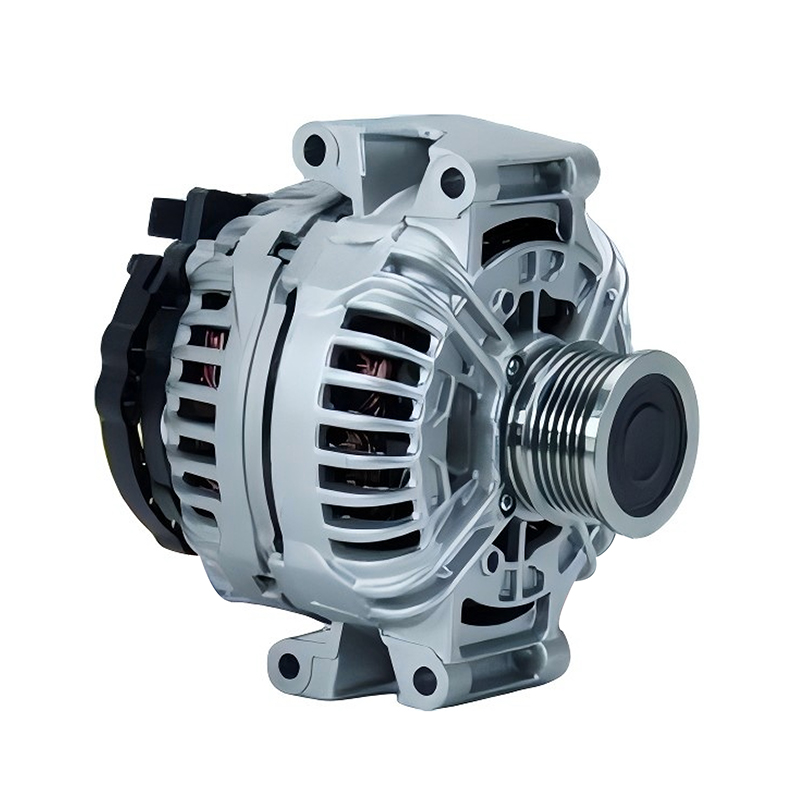
The car alternator is the component responsible for generating the electrical power that charges the battery and supplies the vehicle's electrical systems while the engine is running. It converts the mechanical energy from the engine's crankshaft -- transmitted through a drive belt -- into alternating current (AC), which is then rectified to direct current (DC) by the alternator's internal diode rectifier bridge and regulated to a stable output voltage by the voltage regulator. Without a functioning alternator, the vehicle battery will discharge within minutes to hours of engine start, and the vehicle will eventually stall when battery voltage drops below the minimum required for ignition or fuel injection operation.
Three companies have dominated the original equipment and replacement alternator market globally for decades: Bosch, Delco (General Motors' electrical components division, now marketed under the ACDelco brand), and Denso. Each of these manufacturers supplies alternators as original equipment to multiple vehicle manufacturers, and each offers replacement units for the aftermarket. Understanding what distinguishes a Bosch car alternator from a Delco or Denso unit -- in terms of design philosophy, construction, the vehicles they are commonly fitted to, and what to look for when replacing a failed unit -- is practical knowledge for any vehicle owner, mechanic, or parts buyer navigating the alternator replacement market.
How a Car Alternator Works: Core Technology Common to All Three Brands
Before examining the specific designs and applications of Bosch, Delco, and Denso alternators, understanding the operating principles common to all modern car alternators provides the context for evaluating their differences.
Electromagnetic Generation
All car alternators operate on the principle of electromagnetic induction: rotating a magnetic field through stationary coil windings induces an alternating voltage in the windings. In a Lundell (claw pole) alternator -- the design used by all three major manufacturers in most automotive applications -- the rotating component (the rotor) carries an electromagnet created by a field winding energized through slip rings and carbon brushes. The rotor's claw-pole structure creates an alternating series of north and south magnetic poles as it rotates, and the AC voltage induced in the stationary stator windings is three-phase AC, typically with six claw poles per side of the rotor producing a relatively high AC frequency even at low engine speeds.
Rectification and Voltage Regulation
The three-phase AC output from the stator is rectified to DC by a bridge rectifier consisting of six diodes (positive and negative sets). The rectified output is nominally around 28V peak but is regulated to a stable output voltage -- typically 13.5V to 14.8V for a 12V vehicle electrical system -- by the voltage regulator, which controls the field current through the rotor winding to vary the magnetic field strength and therefore the output voltage. Modern alternators integrate the voltage regulator into the alternator body, often combined with the brush assembly in a single replaceable module called a regulator-brush assembly or brush box.
Output Current Rating
Alternator output is rated in amperes at a defined speed and temperature. A typical passenger car alternator is rated between 80A and 200A depending on the vehicle's electrical load requirements. Vehicles with heavy electrical loads -- large HVAC systems, multiple powered accessories, high-power audio systems -- require alternators at the higher end of this range or may use dual alternator configurations in some commercial applications. The rated current is the maximum sustained output at the standard test conditions; actual output varies with engine speed (lower output at idle than at highway speeds), temperature (higher operating temperature reduces maximum output), and the state of charge of the battery (a deeply discharged battery draws more current from the alternator immediately after start than a fully charged one).
Bosch Car Alternator
Bosch is the largest automotive supplier in the world by revenue, and its alternator division has supplied original equipment to European, North American, and Asian vehicle manufacturers since the 1930s. The Bosch car alternator is the most widely fitted original equipment alternator in European vehicles and is also extensively used in Asian and American vehicles where European-origin drive components are specified.
Bosch Alternator Design Features
Bosch alternators are characterized by their high power density -- achieving high current output from compact housings -- and their design priority on long service life in European driving conditions, which include high proportions of short urban trips, heavy electrical loads from heated seats and windows, and increasingly demanding emissions-driven start-stop cycling that subjects the alternator to far more operational start cycles than traditional driving patterns.
The Bosch Lundell alternator uses a robust housing construction typically in die-cast aluminum, precision-wound stator coils with high-temperature insulation, and a voltage regulator integrated into the rear housing. Bosch introduced the integrated circuit voltage regulator for automotive alternators in the 1960s, a significant advancement over the earlier vibrating-contact external regulators it replaced, and has continued to develop regulator technology through to current systems that communicate with the vehicle's ECU to optimize charging strategy for fuel economy and battery longevity.
Bosch ECO Pro alternators and their successors in current vehicles implement smart charging -- adjusting the alternator output voltage and current based on battery state of charge, driving mode, and electrical load demand rather than simply maintaining a fixed output voltage. This reduces the alternator's mechanical load on the engine during acceleration (improving fuel economy by reducing torque demand) and increases output during braking and deceleration where the alternator's load has zero fuel economy penalty because engine braking is already occurring.
Vehicles Commonly Fitted with Bosch Alternators
Bosch alternators are original equipment on a broad range of European vehicles including Volkswagen Group models (Volkswagen, Audi, Skoda, Seat, Porsche), BMW, Mercedes-Benz, Volvo, Renault, Peugeot, Citroen, Fiat, and many others. They are also OE-fitted to some Ford of Europe, Opel/Vauxhall, and Asian vehicles where the vehicle manufacturer has specified Bosch components. In the replacement market, Bosch alternators are available both as genuine OE replacement units (identical to the original equipment component) and as Bosch aftermarket remanufactured or new units built to OE specification.
Bosch Alternator Identification and Part Numbers
Bosch alternators are identified by a stamped or labeled part number on the alternator housing, typically in a format beginning with AL or 0 124 followed by a series number (for example, 0 124 325 xxx). The sticker on the housing may also show the rated output current, the nominal voltage, and the direction of rotation. Cross-referencing the OE part number to a Bosch replacement or aftermarket equivalent is straightforward using Bosch's TecDoc-based parts catalog system, which is accessible through most automotive parts retail databases.
Delco Car Alternator
Delco Remy -- the electrical components division originally established within General Motors -- has been producing automotive alternators since 1963, when Delco introduced the first internally regulated alternator for production cars. The Delco alternator replaced the DC generator (dynamo) that was standard automotive charging equipment until that point and established the design pattern -- internally regulated, Lundell claw pole construction -- that became the industry standard globally. Today, Delco Remy alternators are marketed and distributed under the ACDelco brand for the aftermarket and as Delco Remy for the heavy-duty OEM and aftermarket market.
The Delco CS-Series Alternator Family
The most significant Delco alternator family in modern automotive use is the CS-series (Charging System), introduced in the late 1980s to replace the earlier DN and SI-series units. The CS series uses a built-in voltage regulator and diode trio rather than the earlier external or plug-in regulator designs, and is produced in multiple frame sizes (CS-121, CS-130, CS-144, CS-148) with current ratings from approximately 85A to 140A. The CS-series design is used across a wide range of General Motors vehicles and was progressively adopted by Ford and Chrysler suppliers as a basis for their own alternator designs.
The Delco CS alternator uses a three-wire terminal arrangement: the main output (B+) terminal at the back of the alternator, the L terminal (warning lamp and charging circuit enable), and the S terminal (battery voltage sense). This external sense wire allows the regulator to sense the actual battery terminal voltage rather than the alternator output voltage, compensating for any voltage drop in the battery cable and ensuring accurate charging voltage regulation at the battery.
Heavy Duty Delco Remy Alternators
Beyond passenger car applications, Delco Remy is particularly well-known for heavy-duty alternators used in trucks, buses, construction equipment, and agricultural machinery. The Delco Remy 28SI, 40SI, and 50DN series are extensively used in Class 6 through Class 8 commercial trucks, where alternator output requirements of 160A to 320A and extreme operating temperatures and vibration levels demand designs that are significantly more robust than passenger car units. These heavy-duty alternators use the same fundamental Lundell claw pole construction as passenger car units but with heavier bearings, more robust diode packages, higher-temperature winding insulation, and more sophisticated thermal management.
Vehicles Commonly Fitted with Delco Alternators
Delco/ACDelco alternators are original equipment on General Motors vehicles including Chevrolet, GMC, Buick, Cadillac, and Oldsmobile (older models). In the replacement market, ACDelco is the OE-branded replacement source for these vehicles, and the brand is available through GM dealerships and the broader automotive aftermarket. Delco Remy alternators are OE-fitted to a wide range of commercial vehicles from major manufacturers including Kenworth, Peterbilt, Mack, International, and Freightliner in the North American heavy truck market.
Delco Alternator Identification
ACDelco and Delco Remy alternators are identified by a part number stamped on the housing or printed on an adhesive label. The GM-specific identifier is a Delco Remy ID number (DRID) that encodes the alternator family, frame size, and specific configuration. Cross-referencing to ACDelco replacement part numbers is performed using GM's parts catalog or standard aftermarket cross-reference databases using the vehicle identification number (VIN) or the original OE part number from the vehicle's parts documentation.
Denso Car Alternator
Denso Corporation -- a Toyota Group company and one of the world's largest automotive component suppliers -- is the dominant supplier of alternators to Japanese vehicle manufacturers and has substantial OE supply positions with North American and European vehicle manufacturers as well. Denso alternators are original equipment on Toyota, Honda, Nissan, Subaru, Mitsubishi, Mazda, Isuzu, and Daihatsu vehicles globally, and are also fitted to a range of non-Japanese vehicles where Denso has won OE supply contracts.
Denso Alternator Design and Construction
Denso alternators are known for high build quality, compact dimensions relative to their rated output, and sophisticated voltage regulation integrated with vehicle management systems. The Denso design philosophy emphasizes efficiency -- Denso has been a leader in developing high-efficiency alternators that reduce fuel consumption by minimizing mechanical load on the engine at any given output level -- and reliability over extended high-mileage service without requiring maintenance beyond drive belt replacement.
Denso introduced the IC voltage regulator for Japanese vehicles in the early 1970s and has progressively refined alternator design through multiple generations. Current Denso alternators for Toyota hybrid vehicles integrate the alternator function with a motor-generator unit in the belt-integrated starter-generator (BISG) or as a dedicated motor-generator in the hybrid system rather than a simple alternator, reflecting Denso's position at the frontier of automotive electrification technology.
Denso Alternator Variants by Application
Denso produces alternators across a wide range of output ratings and configurations for different vehicle platforms:
- Compact car alternators: Low to mid-range current output (70A to 120A) for small-displacement passenger cars with modest electrical loads. These units are noted for their compact physical size relative to output rating and their compatibility with the tight underhood packaging of small Japanese and European vehicles.
- Mid-range passenger car and light truck alternators: 120A to 160A units for mainstream passenger cars, SUVs, and light commercial vehicles. This is the volume product range for Denso in the replacement market and covers the majority of Toyota, Honda, and Nissan applications from approximately 1990 onward.
- High-output alternators: 160A to 220A units for vehicles with high electrical load requirements including diesel-powered commercial vehicles, large SUVs with heavy HVAC systems, and emergency and special-purpose vehicles fitted with additional electrical equipment.
- Agricultural and construction equipment alternators: Denso supplies alternators for agricultural tractors, construction machinery, and generators where the operating conditions -- continuous high load, high ambient temperature, dusty environments -- demand robustness beyond passenger car specifications.
Vehicles Commonly Fitted with Denso Alternators
Denso alternators are OE-fitted to essentially all Toyota and Daihatsu vehicles, the majority of Honda vehicles, most Nissan and Subaru vehicles, and a significant proportion of Mazda and Mitsubishi models. They are also used on selected BMW models (particularly those using Toyota diesel engines or hybrid systems), Lexus vehicles, and Scion. In the North American market, Denso alternators are OE on Toyota Corolla, Camry, RAV4, Highlander, Tundra, and Tacoma, among many others, making them the most commonly replaced alternator in the import vehicle service segment in the United States and other markets with high Japanese brand representation.
Denso Alternator Identification and Part Numbers
Denso alternators carry a part number in the format 100211-xxxx or similar, printed on a label on the alternator housing. The Toyota OE part number (in the format 27060-xxxxx or similar) is often more useful for cross-referencing in the replacement market because most aftermarket databases are indexed by vehicle application (VIN or year-make-model) rather than component part number. Denso also supplies OE-equivalent replacement alternators under its own Denso aftermarket brand, which are considered the highest-quality non-remanufactured replacement option for Japanese vehicle applications.
Comparing Bosch, Delco, and Denso Alternators
| Aspect | Bosch | Delco (ACDelco / Delco Remy) | Denso |
|---|---|---|---|
| Geographic market strength | Europe (dominant), global OE presence | North America (GM vehicles), heavy truck globally | Japan, Asia-Pacific, global Japanese brand vehicles |
| Primary OE vehicle brands | VW Group, BMW, Mercedes, Renault, PSA, Fiat | GM (Chevrolet, GMC, Cadillac, Buick), Kenworth, Peterbilt | Toyota, Honda, Nissan, Subaru, Mazda, Mitsubishi |
| Passenger car output range | 70A to 200A (typical) | 85A to 160A (passenger car), 160A to 320A (heavy duty) | 70A to 220A (typical) |
| Smart charging / ECU integration | Yes (current generation ECO Pro) | Yes (GM current generation) | Yes (current generation, hybrid integration) |
| Heavy duty / commercial vehicle | Present but not dominant | Major market position (Delco Remy brand) | Present (agricultural, construction) |
| OEM replacement brand | Bosch (direct OE replacement) | ACDelco (passenger car), Delco Remy (heavy duty) | Denso (direct OE replacement) |
Diagnosing a Failing Car Alternator
Whether the vehicle is fitted with a Bosch, Delco, or Denso alternator, the symptoms of alternator failure follow the same pattern because the failure modes are common across all designs. Recognizing these symptoms early prevents the secondary damage -- battery deep discharge, stranded vehicle, and in extreme cases dark-road breakdowns -- that a complete alternator failure causes.
Warning Lamp Illumination
The battery warning lamp (the battery symbol on the instrument panel) illuminates when the ECU or the alternator's internal regulator detects that the charging system is not producing the expected voltage. This is typically the first visible sign of alternator trouble. The lamp may illuminate continuously (indicating a complete charging failure) or intermittently (indicating a borderline fault that may be temperature-dependent or load-dependent). A battery warning lamp that illuminates at idle but goes out at higher engine speeds suggests that the alternator's output is insufficient at idle speed but adequate at higher speed -- a symptom consistent with worn brushes, a partially open diode, or a stator winding fault that reduces output at low speed more than high speed.
Electrical System Symptoms
As charging system voltage falls below the normal 13.5V to 14.5V range, the vehicle's electrical systems begin to show signs of low voltage: headlights dim at idle, the radio resets or loses memory, electric windows slow down, and in modern vehicles with extensive electronics, multiple fault codes may appear as modules reset from low supply voltage. In vehicles with smart charging (including many current Bosch and Denso equipped vehicles), the ECU may generate a specific charging system fault code that directly identifies the charging system as the source of the problem rather than requiring the technician to deduce it from secondary symptoms.
Audible Symptoms
Bearing noise from the alternator produces a whining or grinding sound that increases in frequency with engine speed and may vary in pitch as electrical load changes (because the alternator shaft torque and therefore bearing load changes with output current). A defective overrunning alternator pulley (OAP) or overrunning alternator decoupler (OAD) -- the one-way clutch or spring-damper device used in many modern alternators to reduce belt drive torsional vibration -- can produce a rattling or knocking sound at specific engine speeds or during deceleration. The pulley is a replaceable component separately from the alternator body in most cases.
Testing the Charging System
A basic charging system test requires only a digital voltmeter. With the engine running at approximately 2,000 rpm and all accessories off, a healthy alternator should produce 13.5V to 14.8V at the battery terminals. A reading below 13.0V indicates undercharging; a reading above 15.0V indicates overcharging (voltage regulator failure). Load testing -- checking output voltage with all major electrical loads (headlights, climate control blower, rear demister) switched on -- reveals alternators with adequate no-load voltage but insufficient current capacity to maintain voltage under realistic load conditions. A current clamp meter measuring the charge current into the battery can confirm whether the alternator is producing the expected output current for the vehicle's load conditions.
Replacing a Car Alternator: New, Remanufactured, or Aftermarket
When an alternator fails and requires replacement, the buyer faces a choice between new OE-equivalent units, remanufactured (rebuilt) units, and aftermarket new units. Understanding what each option means in practice -- particularly for Bosch, Delco, and Denso-equipped vehicles -- helps in making the best decision for the budget, the vehicle age, and the performance expectations.
New OE-Equivalent Alternators
New OE-equivalent alternators from the original manufacturer (Bosch, ACDelco, or Denso aftermarket division) are manufactured to the same specification as the original equipment unit and carry the manufacturer's warranty. These are the most reliable replacement option for vehicles where alternator performance is critical -- high-mileage vehicles intended for continued long service, vehicles with smart charging systems that require precise voltage regulation behavior, and professional or commercial fleet vehicles where reliability justifies the premium over remanufactured or aftermarket alternatives. Bosch, ACDelco, and Denso all supply their own branded aftermarket replacement alternators that are essentially identical to the OE units fitted at the factory.
Remanufactured Alternators
Remanufactured alternators are used core units that have been disassembled, cleaned, inspected, and rebuilt with new wear components -- brushes, bearings, rectifier diodes, and voltage regulator -- before being tested and sold with a warranty. A professionally remanufactured alternator from a reputable rebuilder provides performance comparable to a new unit at significantly lower cost and is a sensible choice for older vehicles where the economics of a new OE unit cannot be justified by the vehicle's remaining service life. Quality varies significantly between remanufacturers, and low-cost offshore remanufactured units that do not replace all critical wear components or that fail to test to the original specification represent a false economy.
Aftermarket New Alternators
Aftermarket new alternators from third-party manufacturers are produced to replace OE units at lower cost using alternative sourcing for components. Quality varies considerably across this segment. Reputable aftermarket alternator manufacturers (including Valeo, Hella, Magneti Marelli, and others) produce units that meet or closely approach OE performance specifications. Low-cost units from less established sources may use lower-quality diodes, brushes, or bearings that result in shorter service life than either an OE new or properly remanufactured unit. For Bosch, Delco, and Denso-equipped vehicles, the safest aftermarket alternative is either the original manufacturer's own aftermarket brand or a well-established European, Japanese, or North American aftermarket brand with documented specification data for the application.
Important Considerations for Smart Charging Vehicles
Modern vehicles with smart charging systems -- including most current Bosch-equipped European vehicles and many Denso-equipped Japanese vehicles produced after approximately 2010 -- require that the replacement alternator communicates correctly with the vehicle's ECU through the LIN bus (Local Interconnect Network) or CAN (Controller Area Network) interface. Fitting a standard alternator without the smart charging communication capability to a vehicle that expects a smart alternator will typically result in the ECU setting a charging system fault code and defaulting the charging to a fixed non-optimal voltage, eliminating the fuel economy benefit of smart charging and potentially generating persistent fault code illumination. Always confirm that the replacement alternator includes the required communication capability for the specific vehicle application before purchase.
Related products
-
-

Designed to meet the demanding electrical needs of modern vehicles, the 12V 150A 11064/0124615009 Bosch car alternator for AUDI A4 1.6L, 1.8L, 2.0L is a trusted solution for AUDI A4 owners. Boasting a...
See Details -
When it comes to keeping your JOHN DEERE 2007-2009 model running smoothly, a reliable alternator is non-negotiable—and the 12V 200A 12796/0124625030 Bosch car alternator for JOHN DEERE 2007-2009 is en...
See Details -
A reliable power solution for commercial and passenger vehicles, the 24V 90A 20289N/0123520500 Bosch car alternator for Hongyan,Genlyon,Saic,lveco,Howo,Weicha is engineered to deliver consistent perfo...
See Details -
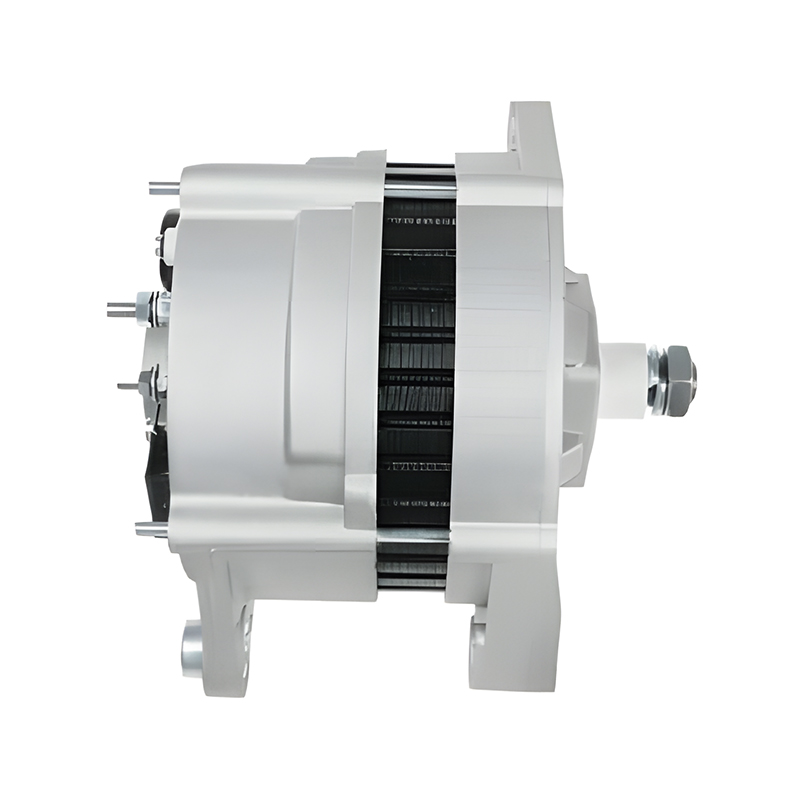
Designed as a reliable power solution for the IVECO 100 E15 engine series, the 24V 80A 12709/0120468116 Bosch car alternator for IVECO 100 E15 combines precision engineering with durable performance t...
See Details -
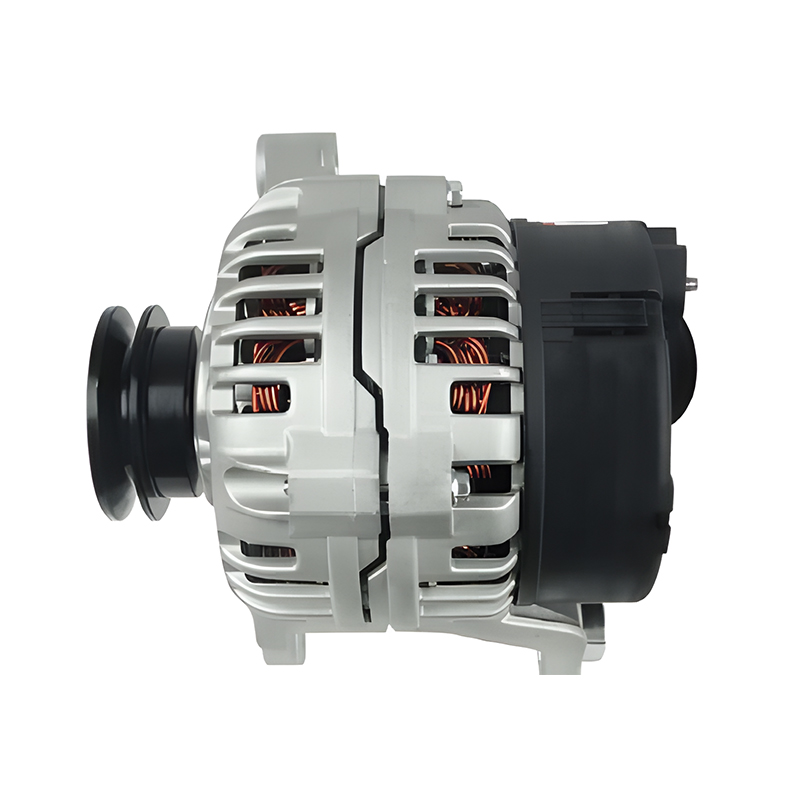
The 12V 90A 0123315503/112406 Bosch car alternator for IV ECO DAIY is a high-quality replacement part specifically designed for the IV ECO DAIY engine series, offering reliable performance to meet the...
See Details

Contact Information
-
Production Plant:No.19, West Taihu Avenue, Wujin District, Changzhou City, Jiangsu Province, China
-
Email:
-
Phone:+86 157 2060 1523
-
TEL:+86-519 8639 0626
Copyright © 2025 Changzhou Hancheng Auto Parts Co., Ltd. All Rights Reserved.
PrivacyAutomotive Alternators Manufacturers High Output Car Alternator Factory
